
When developing a hair styling appliance, performance is only part of the product experience. How the appliance feels in the user’s hand can be equally important.
A powerful hair dryer may deliver excellent airflow, but an uncomfortable handle can make extended use tiring. A professional hair straightener may offer precise temperature control, but poorly positioned buttons can interrupt the styling process.
For beauty brands, wholesalers and distributors, ergonomic design is an important consideration when selecting products for a competitive market.
Whether you are developing a professional hair dryer, curling iron, hair straightener or multifunctional air styler, understanding ergonomic design can help you create products that customers find comfortable and practical to use.
This guide explains the key ergonomic factors that B2B buyers should consider when working with an OEM or ODM hair styling tools manufacturer.
1. Why Ergonomic Design Matters in Hair Styling Tools
Hair styling appliances are often held and operated repeatedly during a styling session.
Their physical design influences:
- Hand comfort during operation.
- Ease of controlling buttons and switches.
- Product handling and maneuverability.
- Wrist positioning during styling.
- User fatigue during extended operation.
- Overall perceived product quality.
For professional salon products, these factors may become particularly important because stylists can use the same appliance repeatedly throughout the working day.
For home-use products, comfortable handling can make everyday styling routines easier.
An ergonomic design should balance product functionality, structural requirements, appearance and manufacturing feasibility.
2. Hair Dryer Handle Design and Grip Comfort
The handle is one of the most important ergonomic components of a hair dryer.
A handle that is too thick, too narrow or poorly positioned may feel uncomfortable during extended use.
When evaluating a hair dryer, consider the following factors.
Handle Diameter
The handle should provide a comfortable grip for the intended user group.
Its dimensions should be evaluated through actual handling rather than relying only on drawings or measurements.
Grip Surface
The housing surface should provide a suitable balance between smoothness, grip and ease of cleaning.
Depending on the product design, manufacturers may consider different surface textures and materials.
Handle Angle
The angle between the handle and the dryer body affects how users position their wrists while directing airflow.
A well-considered handle angle can make the appliance easier to maneuver during different drying positions.
Button Accessibility
Power switches and temperature controls should be positioned where users can operate them naturally without repeatedly changing their grip.
The final layout should be tested with the actual product.
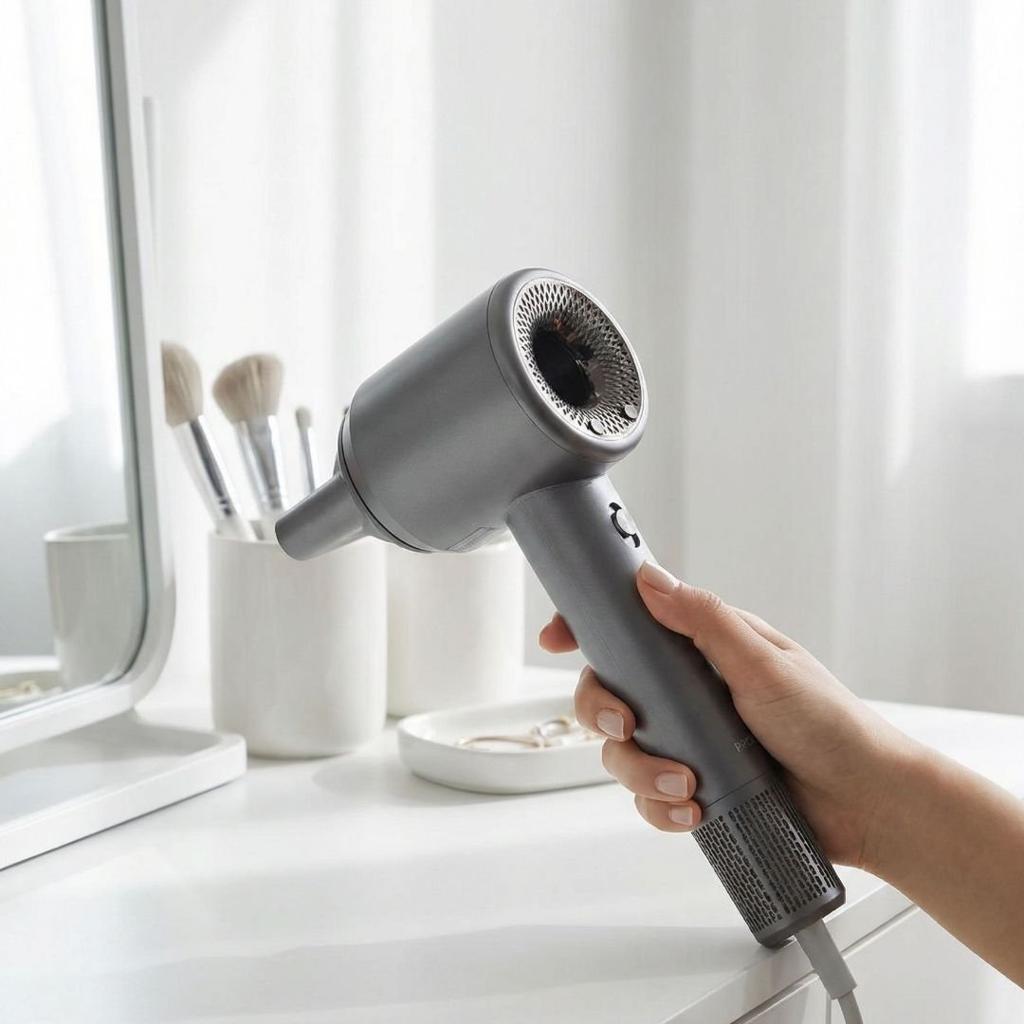
3. Product Weight and Weight Distribution
A lightweight product is often attractive to consumers, but total weight is not the only consideration.
Weight distribution also influences how an appliance feels during operation.
For example, two hair dryers with similar total weights may feel different if one has more weight concentrated toward the front of the barrel.
Important factors include:
- Overall product weight.
- Center of gravity.
- Motor and internal component positioning.
- Handle-to-body balance.
- Attachment weight.
- Cable weight and flexibility.
For high-speed hair dryers, motor placement and internal structural layout can influence both product balance and housing dimensions.
For multifunctional air stylers, the weight of interchangeable attachments should also be considered.
Buyers should evaluate the complete product configuration rather than testing only the main handle.
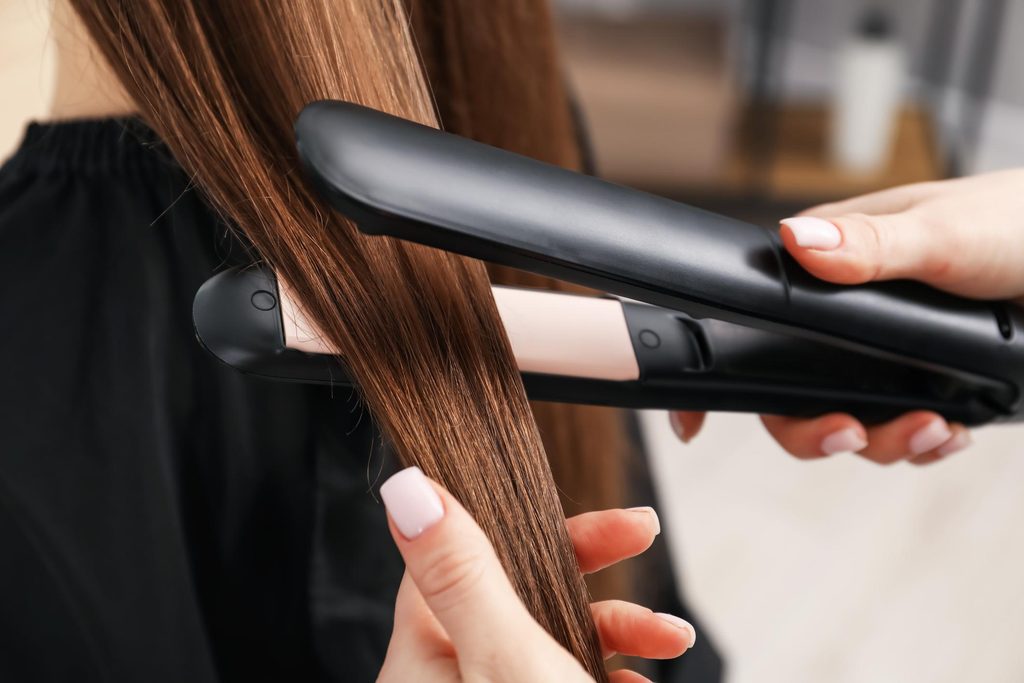
4. Ergonomic Design of Hair Straighteners
Hair straighteners require repeated opening, closing and positioning during styling.
Their mechanical structure should support comfortable operation.
Handle Shape
The housing should provide sufficient space for a natural grip without making the appliance unnecessarily bulky.
Hinge Design
A smooth hinge movement helps users open and close the plates comfortably.
Button Positioning
Power and temperature adjustment buttons should be accessible while reducing the possibility of accidental operation.
Product Balance
The handle and heating plate sections should feel balanced during use.
Cord Connection
The power cord should allow sufficient movement without unnecessarily restricting the user’s hand position.
For professional salon models, the overall design should support repeated operation across different styling angles.
5. Curling Iron Handle and Control Layout
Curling irons require users to hold the handle while positioning the heated barrel around sections of hair.
A practical ergonomic design should consider both hand comfort and operating safety.
Important design considerations include:
- Handle length and diameter.
- Grip surface and material.
- Temperature control accessibility.
- Power switch positioning.
- Heat-resistant tip design.
- Support stand positioning.
- Swivel cord configuration, where applicable.
The temperature controls should be positioned to reduce accidental contact during normal operation.
The barrel and handle should also provide an appropriate separation between the user’s gripping area and hot surfaces.
Actual operating temperatures and protective structures must be validated through product testing.
6. Ergonomics of Multifunctional Air Stylers
Air multi-stylers combine different styling functions through interchangeable attachments.
Their ergonomic requirements can be more complex because the same main handle may be used with several different accessories.
When developing an air styler, evaluate:
Attachment Weight
Heavy attachments may change the overall balance of the appliance.
Connection Mechanism
Attachments should connect securely and be easy to install and remove according to the product design.
Control Accessibility
Users should be able to reach the controls comfortably when different attachments are installed.
Handle Compatibility
The handle should remain practical to hold across the intended attachment configurations.
Storage and Handling
The complete set should be easy to organize, store and transport.
For B2B buyers, testing every included attachment is important. An ergonomic main handle does not automatically mean that every attachment configuration will feel equally comfortable.
7. Cable Design and Freedom of Movement
For corded hair styling appliances, the cable is part of the overall user experience.
A cable that is too stiff or poorly positioned may interfere with movement during styling.
Tené en cuenta:
- Cable length.
- Cable flexibility.
- Strain relief design.
- Connection angle.
- Swivel mechanism, where applicable.
- Cable weight and handling.
For salon products, sufficient cable length may be important because users often work around salon chairs and mirrors.
The cable and strain relief should also undergo appropriate durability and electrical safety testing.
For cordless appliances, the ergonomic evaluation should instead consider battery placement, battery weight and charging convenience.
8. Material Selection and Surface Finishing
The materials used in a hair styling appliance affect more than appearance.
They also influence weight, surface feel, heat resistance, structural strength and manufacturing cost.
Common design considerations include:
Materiales de la carcasa
The selected material should meet the product’s mechanical, thermal and electrical design requirements.
Surface Texture
Matte, glossy and textured finishes can create different tactile experiences.
Grip Areas
Selected areas may use different textures or materials to improve handling.
Heat-Resistant Components
Areas close to heating elements require materials suitable for the intended operating temperatures.
Surface Durability
Finishes should be evaluated for scratches, wear, discoloration and cleaning resistance.
Material selection should always be confirmed through engineering evaluation and applicable testing.
9. How B2B Buyers Should Evaluate Ergonomic Design Before Mass Production
Product appearance alone cannot determine whether an appliance is comfortable to use.
Buyers should request physical samples and evaluate them under realistic operating conditions.
A practical evaluation process includes:
Step 1: Check Overall Weight
Measure the complete appliance and compare it with similar products in the target market.
Step 2: Evaluate Grip Comfort
Hold the product in different positions and check whether the handle feels natural.
Step 3: Test Weight Distribution
Operate the appliance and observe whether the front or rear feels unnecessarily heavy.
Step 4: Check Button Accessibility
Operate all controls without repeatedly changing the normal gripping position.
Step 5: Test Different Styling Positions
Try the appliance at different angles and heights.
Step 6: Evaluate Long-Term Handling
Conduct repeated-use evaluations under appropriate conditions to identify potential discomfort.
Step 7: Record Feedback
Document the results and communicate any required design changes to the manufacturer.
The final approved sample should reflect the agreed product configuration before mass production begins.
10. How OEM and ODM Manufacturers Can Improve Product Ergonomics
For brands developing customized hair styling appliances, ergonomic design should be considered during the early engineering stage.
Depending on the project, an OEM or ODM manufacturer may support:
- Handle shape modifications.
- Housing dimension adjustments.
- Internal component layout optimization.
- Button position changes.
- Product weight optimization.
- Surface texture customization.
- Attachment structure improvements.
- Cable positioning adjustments.
Some changes can be achieved through existing product platforms, while others may require new structural development or tooling.
The feasibility, development cost and timeline depend on the requested modifications.
For this reason, brands should provide reference products, drawings, user feedback and target specifications as early as possible.
11. Choosing the Right Ergonomic Design for Your Target Market
Different customer groups may prioritize different product characteristics.
| Mercado objetivo | Important Ergonomic Considerations |
|---|---|
| Professional Salons | Comfortable grip, weight balance, durable controls and cable movement |
| Home Users | Easy handling, simple controls and comfortable product dimensions |
| Premium Beauty Brands | Refined surface finishes, balanced construction and user experience |
| Travel Products | Compact dimensions, manageable weight and convenient storage |
| Multi-Styling Products | Attachment balance, easy connection and comfortable handling |
There is no single ergonomic design that suits every customer.
The best configuration depends on the intended application, product category, customer preferences and retail positioning.
12. How Aikepro Supports Customized Hair Styling Tool Development
At Aikepro, we understand that a competitive hair styling appliance needs more than attractive appearance and technical performance.
Its design should also consider how customers hold, control and operate the product.
We provide OEM and ODM manufacturing solutions for international beauty brands, wholesalers, importers and distributors.
Our product categories include:
- Secadores de cabello de alta velocidad.
- Secadores de cabello profesionales.
- Planchas para el cabello.
- Rizadores de cabello.
- Cepillos térmicos.
- Multiestilizadores de aire.
- Máquinas y recortadoras de cabello.
Nuestras capacidades de fabricación incluyen:
- In-house mold development.
- Injection molding.
- Product structure customization.
- Customized colors and surface finishes.
- Sample development.
- Production assembly and inspection.
For selected projects, our team can discuss handle adjustments, housing modifications, weight distribution and other ergonomic requirements.
Our standard starting MOQ is 500 pieces for our hair styling tool projects, with the final arrangement depending on the selected product and customization scope.
We work with business partners to develop products that match their technical requirements, target customers and brand positioning.
Preguntas frecuentes
Q1: Why is ergonomic design important for hair styling tools?
Ergonomic design affects grip comfort, weight balance, button accessibility and maneuverability. These factors influence the overall product experience during repeated styling operations.
Q2: Is a lighter hair dryer always more comfortable?
Not necessarily. Total weight and weight distribution both influence how a hair dryer feels. A well-balanced product may feel more comfortable than a lighter product with poor weight distribution.
Q3: Can hair styling tool handles be customized?
Depending on the existing product platform, manufacturers may adjust handle dimensions, housing shapes, surface finishes and button layouts. Major structural changes may require new tooling.
Q4: How should buyers test product ergonomics?
Buyers should evaluate physical samples through actual handling, repeated operation, different styling positions and feedback from representative users.
Q5: Does ergonomic design affect manufacturing costs?
It can. Changes to housing dimensions, internal component placement, materials or molds may influence development costs and production requirements.
Q6: Can OEM manufacturers develop ergonomic hair dryers for professional salons?
Yes. Depending on the project, manufacturers can discuss handle design, product balance, control placement, weight and cable configuration for professional applications.
Reflexiones finales
Ergonomic design is an important part of developing competitive hair styling appliances.
A product should not only perform its intended function but also feel practical and comfortable during everyday use.
For beauty brands and distributors, evaluating grip comfort, weight distribution, button placement, cable design and attachment handling can help identify products with stronger user appeal.
Working with an experienced OEM or ODM manufacturer allows these considerations to be addressed during product development rather than after mass production.
Looking for customized hair styling tools for your brand?
Contact Aikepro to discuss your OEM and ODM requirements, product design ideas and wholesale projects.
Sitio web: https://www.aikepro.ltd/
Correo electrónico: info@aikepro.ltd
MOQ: Starting from 500 pieces for selected projects.