
Consider this sourcing scenario: a brand approves a charcoal sample, then receives a production unit whose handle looks darker than its body. Both parts may have been made against the same color reference. The disagreement begins because nobody defined how the finished assembly should look, under which light, or how much variation was acceptable.
For brands sourcing custom hair dryers, straighteners, curling irons and multi-stylers, hair styling tool color matching needs a clear approval process. A color code communicates an intended shade, but the purchase specification should also describe the material, finish, reference sample and evaluation conditions.
This guide explains how buyers and manufacturers can turn a visual idea into a practical color approval specification before production.
1. Start with a Component Color Brief
Begin by identifying every visible component that needs approval. A hair dryer might have a main housing, handle, rear filter cover, control buttons, nozzle and decorative ring. A multi-styler adds attachments that should be reviewed alongside the handle.
For each component, decide whether it must match another part, provide an intentional contrast, or follow its own reference. “All parts black” leaves too much open to interpretation.
A useful brief might say: “The housing and handle should match the approved matte charcoal assembly; the buttons are intentionally glossy black; the decorative ring follows a separate metallic reference.” This is an example of specification wording, not a specification for an existing Aikepro product.
Mark the relationships on a component drawing or photograph. Buyers can then review the product as a coordinated design instead of approving disconnected color samples.
2. Agree on the Physical Reference
Record the complete color identifier, including its system and suffix, when using a commercial color standard. Do not reduce a reference to a number that could refer to different material formats.
Pantone’s material guidance recommends choosing a reference format close to the end application and explains that the same color can vary across plastic, cotton and lacquered paper. For a plastic appliance housing, agree how the chosen reference will be translated into the actual production material and finish. Coatings & Pigments Color Systems
Use photographs and screen images for discussing design direction. For final approval, ask for physical samples that both parties can compare against the agreed reference.
Define the reference hierarchy in writing. For example, the original color code may guide development, while a subsequently approved production-material sample controls the final appearance. Record any accepted departure from the original reference so a later inspector does not apply a different target.
Keep this color decision attached to the broader product sample approval, with a separate record for each accepted finish.
3. Specify Color and Surface Finish Together
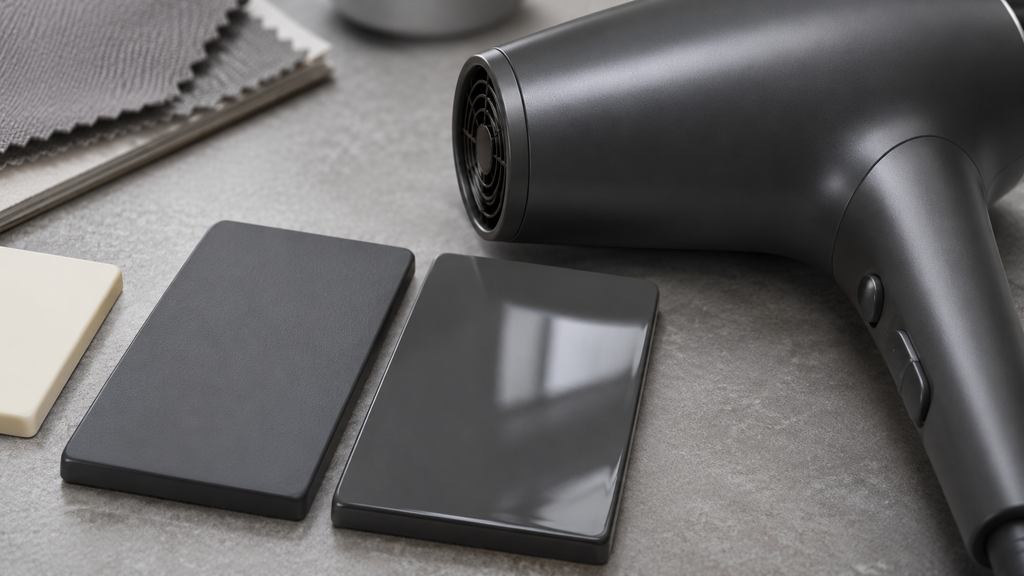
“Matte,” “satin” and “glossy” are useful starting descriptions, but buyers should also approve the intended surface appearance. X-Rite explains that gloss and texture affect apparent color, and that measurement geometry and specular settings influence the result. xrite.com
Ask the manufacturer to identify the proposed material and finishing process for each visible component. A molded housing, a painted cover and a decorative metal part should not be approved as though they were the same surface.
Where a small material plaque is used during development, confirm when an actual finished component will be supplied. Include the assembled appliance in the final review: the buyer needs to approve the appearance customers will receive.
Record texture and gloss expectations alongside the color reference. If a numerical gloss target is agreed, document its measurement method separately rather than assuming a color-difference result covers every appearance characteristic.
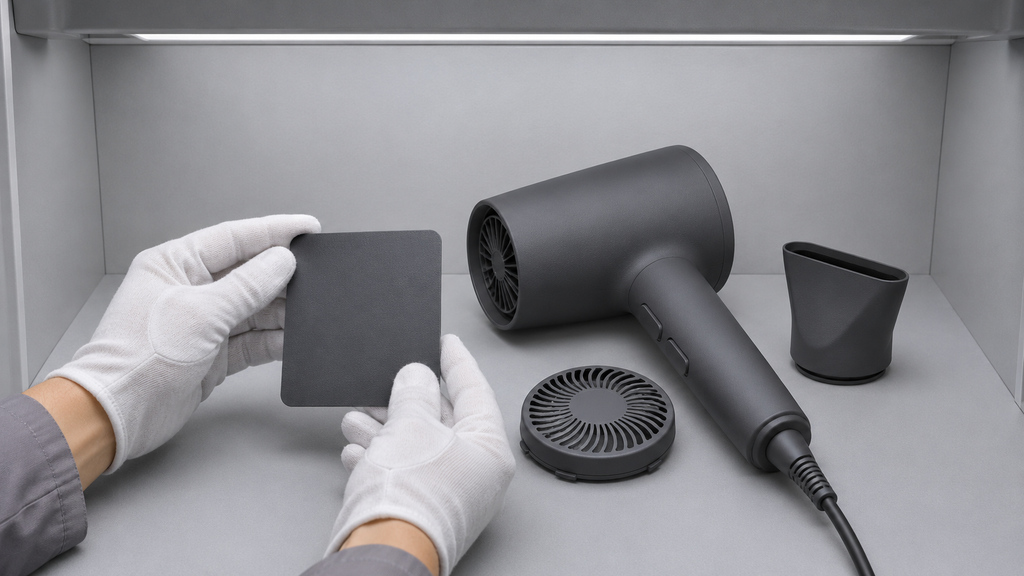
4. Define Lighting Before Judging a Match
A color approval should name the viewing conditions. “Looks correct in the office” is difficult to repeat at a factory or an inspection company.
Metamerism occurs when two samples appear to match under one light source but differ under another. X-Rite notes that it is particularly relevant when assemblies combine different materials or colorant formulations. X-Rite
Agree a primary viewing condition and any additional lighting relevant to the product’s intended presentation. Where a light booth is used, identify the selected light sources rather than requesting an unspecified “daylight check.” Review the physical references and production samples together under those same conditions.
For example, a buyer may want a coordinated appliance set to retain an acceptable appearance under agreed retail and home-lighting conditions. That requirement should be discussed during sampling.
Describe any unacceptable mismatch and keep approval photographs as supporting records. The physical samples and documented viewing procedure remain the basis for the decision.
5. Agree on a Measurement Method and Realistic Tolerance
If instrumental color measurement is part of the project, a statement such as “Delta E passed” is incomplete. The supplier and buyer need to agree on the calculation, settings and acceptance limit.
X-Rite’s measurement guidance identifies important variables including instrument geometry, aperture, measurement mode, illuminant, observer setting, sample presentation and environment. Record the relevant settings and the location on the part being measured. Specify how repeated readings will be handled. X-Rite Blog
A curved handle or small decorative ring may require a different practical measurement arrangement from a flat plaque. Ask how the proposed method applies to the actual component, and document any agreed substitute sample.
There is no single Delta E limit that this guide can recommend for every hair styling appliance. Acceptable tolerances should reflect customer expectations and process capability. Review physical samples representing acceptable and unacceptable differences before finalizing a commercially workable limit. X-Rite Blog
Also decide how to resolve a disagreement between instrument results and visual assessment. The order specification should identify the review procedure and who can authorize an exception, instead of leaving that decision until shipment.
6. Review Matching Parts as an Assembly
Place the approved components together and inspect their intended relationships. Check the housing against the handle, the filter cover against the body, and each attachment against the main unit. Review a product family together if several appliances are intended to share one color scheme.
Pay attention to boundaries where two surfaces meet. Ask whether an observed contrast is intentional, accepted, or still requires adjustment.
Metallic and special-effect finishes need particular consideration. X-Rite describes how their appearance changes with lighting and viewing angle. Agree on viewing orientations and discuss whether specialist multi-angle measurement is appropriate for the finish. X-Rite
If packaging shares the brand color, approve its relationship to the appliance separately. Specify the intended visual coordination and retain both references; do not assume that the packaging and housing use the same production target.
7. Put the Approval Criteria in One Specification
The following template can accompany an RFQ or sample review. Complete it jointly before approving the finish; it is not a claim that every project uses the same equipment or tolerance.
| Specification field | What to agree and record |
|---|---|
| Component scope | List the housing, handle, buttons, trim and attachments requiring approval. |
| Color reference | Complete identifier and system, physical reference ID, and reference hierarchy. |
| Material and process | Agreed substrate and whether the component is molded, painted or otherwise finished. |
| Surface appearance | Approved texture, gloss and any metallic or special-effect reference. |
| Viewing conditions | Primary and secondary light sources, sample arrangement and viewing orientations. |
| Instrumental method | If required, instrument configuration, measurement locations, formula and agreed tolerance. |
| Assembly relationships | Which components must match and which contrasts are intentional. |
| Approval record | Master-sample ID, revision, date, approvers and any specifically accepted exceptions. |
| Production review | Agreed sampling stages, records, review authority and handling of deviations. |
| Change control | Changes requiring review and the approval process for replacement references. |
When reviewing a sample, record a clear decision for each component: approved, approved with a defined exception, or revision required. Describe the requested correction precisely, such as a mismatch between the rear cover and housing under the agreed primary light. Keep the previous reference until the replacement has been accepted.
8. Keep the Approved Reference Valid for Reorders
Identify the retained master samples clearly. Agree who holds them, how they will be protected, and when their condition should be reviewed. If a reference is damaged, contaminated or no longer suitable, replace it through a documented joint approval.
For reorders, identify the approved revision on the purchase documentation. Keep a record of the color samples associated with each production run so later questions can be investigated against the correct reference.
Ask the manufacturer to flag proposed changes to the material, colorant, coating, finishing supplier or surface process that could affect the approved appearance. Review the affected components before accepting the change. If the project involves a new housing or texture, include color approval in the custom mold development process.
Do not allow an accepted production exception to quietly replace the master standard. State whether the decision applies only to a particular batch or formally establishes a new approved revision.
Часто задаваемые вопросы
Is a Pantone code enough to approve a custom hair tool color?
Use the code as a reference, then agree on the physical sample, material, finish and evaluation conditions. Record which approved reference controls production.
Can I approve the final color from a supplier photograph?
Use photographs to discuss progress. Request physical samples for final color approval and retain the agreed reference and approval record.
What Delta E value should my purchase specification require?
Agree the calculation and limit after reviewing your appearance expectations and the proposed process. Specify the measurement conditions; an unexplained number is insufficient.
Should the main unit and attachments be approved together?
Yes. Review their intended color relationships as a complete set and record any intentional differences in gloss, material or shade.
Discuss Your Custom Color Project with Aikepro
Aikepro works with beauty brands, wholesalers and distributors on OEM and ODM hair styling appliances. Share your product category, component color brief, physical references, preferred finish and target quantity so the available customization options can be discussed.
Standard MOQ: 500 PCS.
Contact info@aikepro.ltd or submit your project requirements through the Aikepro customization page.