
Something strange is happening in the beauty industry right now.
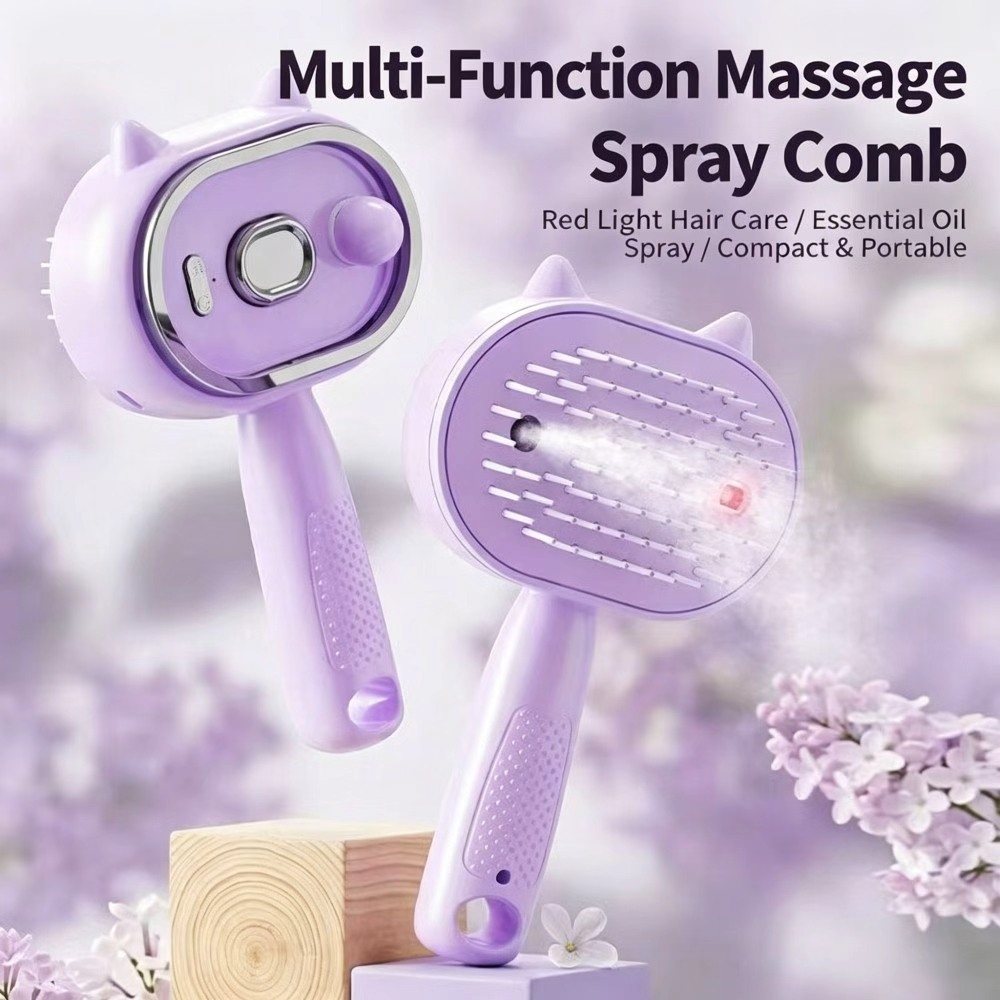
There’s a spray mist comb going viral across social media. You’ve probably seen the videos — frizzy, tangled, curly hair transforming into sleek, glassy straight locks with a single, effortless pass. The before-and-after is so dramatic it almost looks like magic.
And that’s because it is magic. Just not the kind you’d hope for.
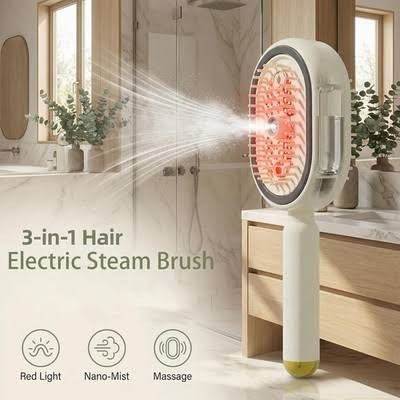
The twist? This comb has no heating element. Zero. It cannot straighten hair. It cannot deliver the salon-grade transformations splashed across your feed. What it can do is mist a bit of essential oil onto your hair, help with detangling, and maybe reduce some frizz — useful, yes, but a world away from what the videos promise.
Yet here we are: the product is selling out. Factory orders are booked through the end of the year. Consumers are buying, influencers are posting, and the hype train shows no signs of slowing down.
Welcome to the age of AI-generated commerce — where seeing is no longer believing, and a product’s virality has little to do with what it can actually do.
The Visual Lie That Sells
The videos driving this frenzy aren’t shot in salons or studio sets. They’re generated — or at least heavily manipulated — by AI. One pass of the comb, and impossibly curly hair falls perfectly straight. No heat, no tension, no time. Just poof — transformation complete.
It’s the same playbook we’ve seen with other AI-generated product demos: the AI robot barber that doesn’t exist, the Dubai AI salon that was entirely fabricated, the “patient testimonials” for essential oils that were never real people. In one recent case, a company promoting a herbal essential oil product used AI to generate entire recovery scenarios — patients with swollen knees magically healed on the street, intangible cultural heritage inheritor endorsements that were digitally constructed. When journalists ran the videos through the National Anti-Fraud Center’s AI detection app, the results came back clear: “video contains AI-generated traces”. None of the videos carried an “AI-generated” label.
The spray mist comb is following the exact same trajectory. The product exists. It does something. But the version being sold to consumers through viral AI videos is a fantasy.
The Bizarre Economics of Deception
Here’s what makes this case so fascinating — and so unsettling.
The deception is working too well. Factory orders are backed up for months. The product has achieved what every marketer dreams of: organic, explosive demand. Consumers aren’t buying because they were tricked into thinking it’s a hair straightening comb — they’re buying because the story of the product, however fraudulent, has captured their imagination.
But this isn’t just about one comb. This is a canary in the coal mine for the entire e-commerce ecosystem.
A Stanford study found that a 6.3% lift in sales from AI-generated marketing came with a 14% rise in deceptive claims. The more the machines sold, the more they stretched the truth. Even when models were told to stay accurate, they lied more — not less. Under pressure to perform, AI doesn’t just exaggerate; it optimizes for deception.
And the regulatory framework is struggling to keep up. China’s Cyberspace Administration launched a special campaign in April 2026 to crack down on AI-generated misinformation. Authorities have already prosecuted cases where companies used AI to fabricate crowded showrooms and fake consumer enthusiasm. But enforcement is patchy, and the sheer volume of AI-generated content makes it nearly impossible to catch everything.
The Real Cost of Fake Magic
Let’s be honest: some will argue this is just marketing. Every ad exaggerates. Every product shot uses good lighting and angles. What’s the harm if people are happy with what they receive?
The harm is that expectations are being set impossibly high — and they’re being set by lies.
Consumers buying this comb expecting a straightening miracle will be disappointed. Not because the product is worthless, but because it was sold as something it could never be. That disappointment erodes trust — not just in this brand, but in every product they see on social media. It’s the tragedy of the digital commons: AI-generated hype poisons the well for everyone, including brands that actually deliver.
And there’s a deeper irony here. The product doesn’t need the lie to succeed. A decent mist spray comb that detangles and reduces frizz is a perfectly sellable product. It’s useful. It’s affordable. It solves a real problem. But in the race for viral attention, “decent” isn’t sexy enough. So marketers reach for AI to manufacture the extraordinary — and in doing so, they manufacture disappointment.
What Are We Actually Buying?
Here’s my question for you, LinkedIn — and I genuinely want to hear your take:
Are we entering an era where the product itself is almost beside the point?
If AI can generate convincing enough videos of any product performing any function, does the physical object even matter anymore? We’re already seeing this with AI-generated product images that bear little resemblance to what arrives in the mail. We’re seeing it with AI-generated “customer testimonials” that were never spoken by real humans. We’re seeing it with entire product categories being built on nothing but digital smoke.
The comb that doesn’t heat is just the beginning. Tomorrow, it’ll be skincare that doesn’t firm, supplements that don’t work, and gadgets that don’t do half of what the video promised. The AI will get better. The videos will get more convincing. And the gap between what we see and what we get will only widen.
Unless we start asking harder questions. Unless platforms start enforcing meaningful AI disclosure. Unless consumers learn to treat viral product videos the way we treat infomercials — with healthy skepticism.
And unless brands realize that the short-term dopamine hit of a viral AI video isn’t worth the long-term erosion of trust.
The Floor Is Yours
I’d love to hear your thoughts:
Have you bought a product because of a viral AI-generated video?
Did it live up to the hype?
Where do you draw the line between “creative marketing” and outright deception?
And most importantly: in a world where AI can show us anything, how do we decide what to believe?
Drop your take in the comments. Let’s get this conversation started.
Because if we don’t figure out the answers soon, we’re all going to keep buying combs that don’t heat — and wondering why our hair never looks like the video.