
The current application of AI in the hair care tools industry is no longer merely about “automation”; rather, it is evolving into a profound “revolution in systematic experiences.” It is transforming traditional single-function hardware—such as hair dryers and straighteners—into smart devices that integrate real-time diagnostics, algorithmic decision-making, precise execution, and personalized services.
Today, we will delve into the prospects for these applications from three perspectives: technological pathways, market trends, and future outlook.
The Evolution of Core Technology: From “Perception” to “Decision-Making”
AI is reshaping the technological foundation of hair styling tools, with its core logic centered on building a complete “perception-analysis-adaptation” closed-loop system.
Intelligent Perception and Environmental Adaptation
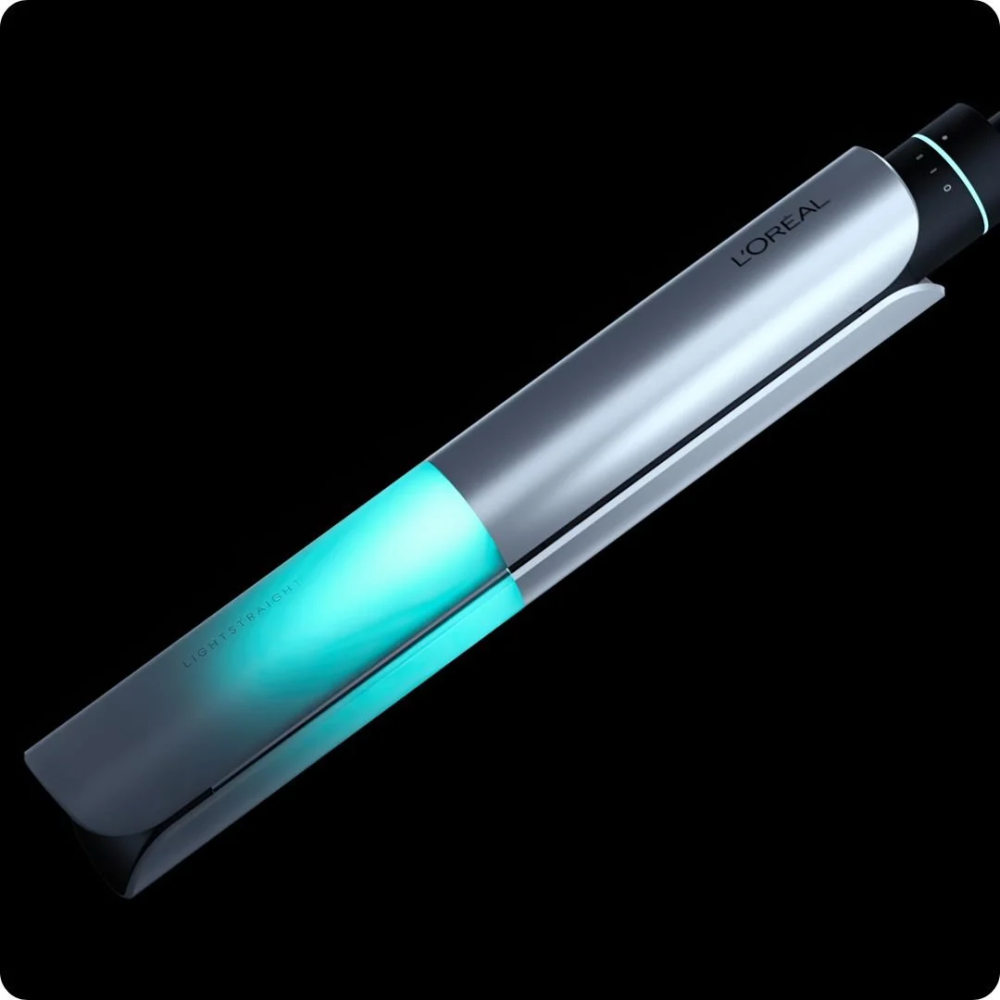
Traditional hair styling tools relied on fixed power outputs, whereas today’s AI-powered tools utilize built-in precision sensors to achieve real-time perception of the environment and user behavior. Take L’Oréal’s Light Straight + Multi-styler, unveiled at CES 2026: the device employs smart internal sensors and proprietary machine-learning algorithms that adapt to the user’s movements and gestures as they style, fine-tuning performance for a more personalized experience. It uses near-infrared light to reshape internal hydrogen bonds, keeping the natural hair cuticle smoother, shinier, and stronger while achieving desired styling results. According to L’Oréal’s testing, the device works three times faster and leaves hair twice as smooth as leading premium stylers.
Similarly, GHD Sculpt, launched in July 2026 as the brand’s first consumer-facing AI-powered styling tool, reads hair temperature nearly 3,000 times per second—a quantum leap from traditional plate-temperature measurement. Four measurement systems feed the AI microprocessor, detecting when hair is between the plates, how much hair is being styled, and the speed of the tool’s movement. The AI machine-learning algorithm was trained on thousands of hair types and styles, learning to adjust power and heat delivery with extreme precision. GHD claims the tool delivers five-times faster styling, up to 90% more shine, and 2.5-times less frizz. Developed over five years at GHD’s Cambridge research laboratory, Sculpt represents what the company calls a “transformative step forward to completely reinventing the styler category”.
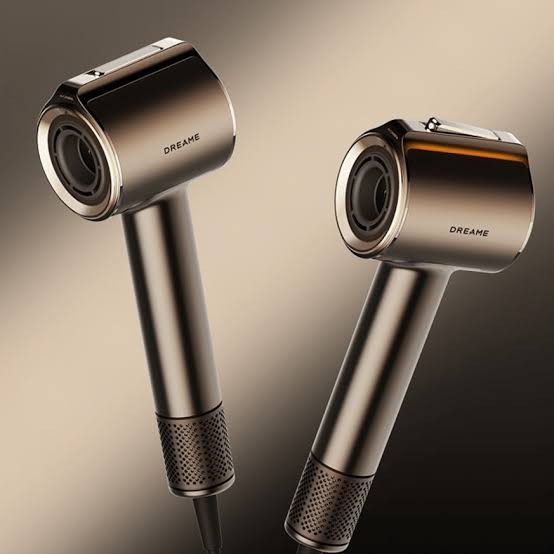
In the hair dryer segment, Dreame Miracle Pro, which won the IFA 2025 “Best in Beauty & Personal Care” award, incorporates a TOF (Time of Flight) smart sensor that captures the distance between the outlet and the hair in real time, with AI algorithms dynamically adjusting airflow speed and temperature. When the dryer is too close to the scalp, it automatically lowers temperature and reduces airflow to prevent heat damage; when farther away, it intelligently boosts airflow to maintain drying efficiency.
Precise Execution and Innovative Energy Applications
AI decision-making requires a robust execution layer to be realized. A significant breakthrough lies in the innovation of heating methods. Traditional metal plate heating can easily damage hair strands, whereas L’Oréal’s Light Straight + Multi-styler uses patented infrared light technology with glass plates that do not exceed 160°C—far below the 200°C+ temperatures of conventional straighteners. Traditional straighteners can reach temperatures of 400°F and above, the threshold at which keratin denatures, leading to weakened cuticles, breakage, and reduced shine. L’Oréal frames this shift as moving hairstyling “beyond correction into prevention”—limiting cumulative heat exposure to preserve the integrity of natural hair from the start.
Beyond heating innovation, nutrient delivery systems are also being revolutionized. Dreame’s Miracle Pro features a pioneering ultrasonic atomization technology that operates at 210,000 oscillations per second, breaking down hair care essences into 7-micron atomized particles that penetrate the hair shaft down to the core—achieving a three-in-one solution of “drying, protecting, and nourishing”. The device also incorporates dual-wavelength red light therapy (1064nm and 633nm), which penetrates different layers of the scalp to revitalize scalp cells, enhance the scalp barrier, and promote blood circulation to nourish hair follicles from the root.
Algorithm-Driven Personalized Services
AI makes a “tailored” hair care experience possible. Dreame’s NX01 supports smart connectivity with its app, allowing users to customize air temperature, airflow speed, and mode names, with support for up to three user memory profiles—enabling a “one machine, multiple users” approach. It also features a smart gravity-sensing safety system: when the dryer is placed flat, the gravity sensor automatically triggers a safety mechanism that intelligently reduces airflow and adjusts temperature to prevent overheating. Multiple professional magnetic nozzles support automatic identification and preset memory, significantly streamlining operations.
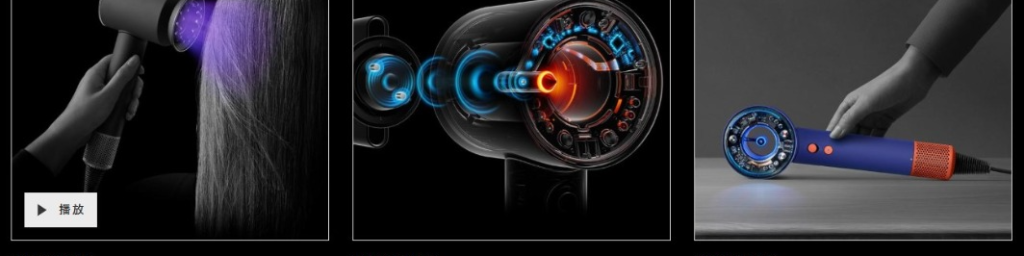
Dyson has taken personalization further with its Supersonic Nural™, which uses a network of Nural sensors to automatically activate intelligent features that optimize styling routines, with attachment learning that recognizes each attachment and remembers user styling preferences. The Dyson Airwrap i.d.™ connects via Bluetooth, enabling users to intelligently customize styling workflows through an app—recording the time needed for curling, styling, and cool-shot setting, with audible prompts that guide users through a salon-like curling process at home.
Market Outlook and Trend Insights
AI technology is redefining the value chain of hair care tools and creating significant market opportunities.
Rapid Market Growth
According to Stratistics MRC, the global AI hair care technology market was valued at $7.5 billion in 2025** and is projected to grow to **$15.4 billion by 2032, with a compound annual growth rate (CAGR) of 10.8%. This growth is primarily driven by consumer demand for personalized hair care solutions, with the AI haircare advisor market alone expected to grow from $309.65 million in 2025 to $690.37 million by 2032 at a CAGR of 11.96%.
Generational Shift Among Key Consumer Demographics
Millennials and Gen Z are the core forces driving this transformation. They value personalized, tech-savvy, and data-driven experiences and are highly receptive to smart tools that offer customized services. According to the 2025 China Hair Styling Market Insight Report, among 14 online smart services, “smart product recommendations” ranked first at 22%, far outpacing AR hairstyle simulation at just 3%—indicating that consumers’ most demand is for intelligent, personalized recommendations rather than mere virtual try-ons. Meanwhile, over 90% of Chinese consumers have shifted their health mindset from “post-treatment” to “daily prevention,” particularly in scalp and hair care.
Competitive Landscape: New Entrants Reshaping the Market
The competitive dynamics are shifting dramatically. In 2026, Dreame held an event in San Francisco under the “Self Next” banner, positioning hair care as no longer just about heat—but about “data, sensors and software doing a surprising amount of the work for you”. Nearly every new tool in its lineup connects to an app that builds a profile of the user’s hair—its type, thickness and condition—and then adjusts heat and airflow accordingly. The company introduced the AirStyle Pro HI, an 8-in-1 styling system with auto-wrap barrels that create curls with minimal manual effort and brushes calibrated for different hair types, as well as the Aero Straight Pro, which combines drying and straightening into a single step, monitoring temperature and moisture in real time to reduce overall heat exposure. Even more ambitiously, Dreame’s concept product Halo—a floor-standing hands-free dryer—tracks the user’s head and adjusts airflow automatically.
Philips, targeting the 250 million consumers suffering from hair loss concerns, has launched an intelligent high-speed hair dryer with proprietary smart temperature control technology, achieving “one machine, three protections”—nourishing the scalp, strengthening hair roots, and smoothing hair strands simultaneously during the drying process.
The value shift from “brand premium” to “technology premium” is accelerating. In the past, the high-end market was dominated by the “myth” of international brands. Now, tech-forward brands are establishing a new perception—that “technological leadership equals superior products”—through core technologies and tangible experiences, successfully penetrating the high-end price segment. This indicates that future competition will revolve around technological ecosystems.
Challenges and Future Outlook
Despite the promising outlook, the widespread adoption of AI hair care tools still faces challenges. Cost remains a primary barrier; the use of precision sensors, AI chips, and extensive R&D investments results in higher product pricing—GHD Sculpt retails at £369 (approximately $495), limiting penetration in price-sensitive markets. Consumer awareness in emerging markets still needs cultivation; the concept of AI-driven personalized hair care requires significant education. Data privacy and security—particularly regarding the collection and storage of biometric data such as scalp and hair conditions—is another critical issue the industry must address. Furthermore, some AI haircare applications remain in early stages; for instance, AI hair-washing machines currently offer only limited personalization, with algorithms trained on as few as 1,000 scalp data samples, often merely categorizing users into preset labels rather than delivering truly customized care.
The Blurring Boundary Between Home and Professional Care
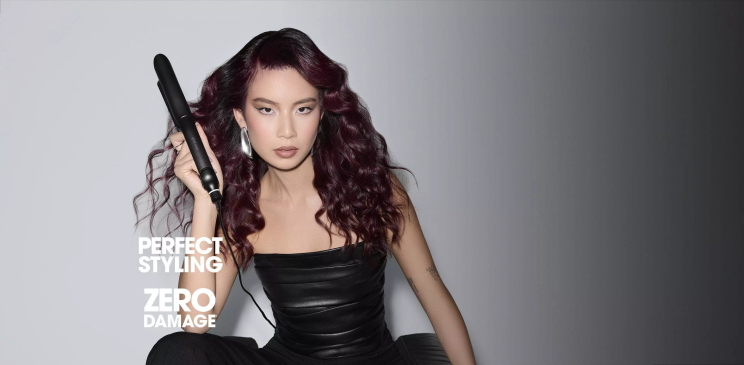
Looking ahead, hair care tools will evolve beyond mere hardware to become “modular, customized service terminals” that bridge the gap between at-home care and professional salons. GHD has already been using AI for R&D for years, generating 300 images of curls using 47 models and building a “style library” so customers could see curl results across hair types. Perfect Corp. has introduced 11 AI-powered hair APIs encompassing both simulation (AI hair coloring, AI haircuts, AI extensions, AI bangs design) and analysis (hair type, length, curliness, density) capabilities. This reflects a broader trend: AI will systematically blur the boundaries between home care and professional salon services.
We can foresee that future hair care consumption will increasingly rely on underlying data captured by sensors and the physical outputs of AI-driven decisions, thereby truly achieving a paradigm shift from “experience-driven general care” to “algorithm-driven precision interventions.”
As such, AI is fundamentally transforming the hair care tools industry. It brings not merely an accumulation of features, but a profound revolution in the personalization, precision, and intelligence of “beauty.”
“I’m genuinely curious to hear your take: When a styling tool reads temperature nearly 3,000 times per second, would you trust an algorithm to make daily styling decisions for you, or do you still prefer to rely on your own feel and experience? Is AI-powered hair care a true revolution or just a flashy new gimmick? Let’s discuss!”
AI #BeautyTech #HairCare #Innovation #FutureOfBeauty#hairdryer #Aikepro