
Packaging plays an important role in the success of a hair styling tool product. It is not simply a container that protects an appliance during transportation. It also influences how customers perceive a brand, how retailers display products and how efficiently distributors manage inventory.
For beauty brands, wholesalers and importers, choosing the right packaging requires balancing product protection, visual presentation, production costs and shipping requirements.
Whether you are launching a private label hair dryer, hair straightener, curling iron or multifunctional air styler, this guide explains the key factors to consider when developing customized hair styling tool packaging.
1. Understand Your Target Sales Channel
Before designing packaging, identify where your products will be sold.
Different sales channels require different packaging solutions.
Retail Stores
Products displayed in physical stores need packaging that attracts attention and communicates important product features.
Consider:
- Clear product images and visual hierarchy.
- Attractive colors and premium finishes.
- Easy-to-read product specifications.
- Suitable shelf dimensions.
- Practical product visibility.
E-commerce Platforms
Online products face different challenges because customers cannot physically inspect the packaging before purchasing.
Consider:
- Strong protection against transportation damage.
- Compact packaging dimensions.
- Clear product identification.
- Attractive unboxing presentation.
- Packaging suitable for courier handling.
Wholesale and Distribution
For distributors handling large quantities, packaging should also support warehouse storage and efficient transportation.
Consider:
- Consistent carton dimensions.
- Easy stacking and handling.
- Clear carton labels.
- Accurate product quantities.
- Protection against moisture and impact.
Understanding your sales channel helps you choose a packaging solution that works throughout the supply chain.
2. Choose the Right Packaging Structure
Different hair styling appliances require different packaging structures.
Common packaging options include:
Color Box
A popular option for retail hair dryers, straighteners and curling irons. It provides sufficient space for product photography, specifications and brand information.
Gift Box
A premium packaging option for beauty brands targeting higher-end consumers. Magnetic closures, customized inserts and refined finishes can improve the presentation.
PVC or Transparent Box
Transparent packaging allows customers to see the actual product before purchasing. It may be suitable for selected retail environments.
Blister Packaging
Blister packaging can hold smaller products and accessories in a fixed position, helping customers see the product clearly.
Custom Insert Packaging
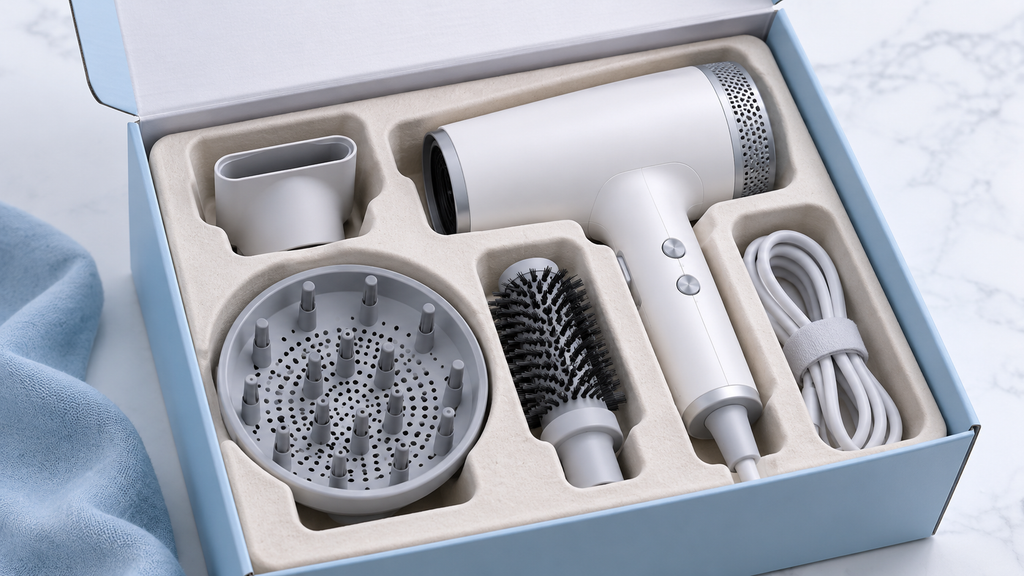
Customized cardboard or molded inserts help keep the appliance, accessories and cables organized inside the box.
The best packaging structure depends on product dimensions, weight, accessory quantity, target price and sales channel.
3. Design Packaging Around the Actual Product
One common packaging mistake is designing the box before confirming the final product configuration.
A hair dryer with a concentrator nozzle requires different internal space from a multifunctional air styler with several attachments.
Before finalizing packaging artwork and dimensions, confirm:
- Product dimensions and weight.
- Number of included accessories.
- Power cord arrangement.
- Protective materials.
- Instruction manual placement.
- Internal tray structure.
For multifunctional styling tools, consider using separate compartments for the main unit and interchangeable attachments.
A well-designed insert prevents products from moving excessively inside the box and helps create a more organized unboxing experience.
4. Balance Visual Appeal and Product Protection
An attractive package is valuable, but product protection must remain the priority.
Hair styling appliances may contain delicate components such as heating plates, electronic displays, motors, switches and detachable accessories.
Packaging should help protect these components from:
- Impact during transportation.
- Pressure from stacked cartons.
- Scratches caused by internal movement.
- Moisture exposure.
- Damage to product surfaces and accessories.
Common protective materials include:
- Molded pulp inserts.
- EPE foam.
- EVA foam.
- Corrugated cardboard dividers.
- Protective bags and sleeves.
The choice of material depends on the product structure, packaging budget and transportation conditions.
For international shipments, conduct appropriate packaging and transportation tests before approving the final design.
5. Include the Right Product Information
Packaging should provide useful information without becoming visually overcrowded.
For hair styling appliances, important information may include:
- Product name and model.
- Rated voltage and frequency.
- Rated power.
- Temperature and speed settings.
- Main product functions.
- Included accessories.
- Safety instructions.
- Manufacturer and importer information, where required.
- Applicable regulatory markings.
Always confirm the labeling requirements of the destination market.
For example, electrical specifications and plug configurations may differ between the United States, European markets, the United Kingdom and other regions.
Incorrect product information can create unnecessary compliance and customer service problems.
6. Use Packaging to Strengthen Your Brand Identity
For private label brands, packaging is an opportunity to create a recognizable product identity.
A consistent visual system across different products helps customers recognize your brand.
Consider standardizing:
- Brand colors.
- Typography.
- Product photography.
- Icon styles.
- Product information layout.
- Packaging finishes.
You can also consider premium finishing options such as:
- Matte or glossy lamination.
- Spot UV.
- Embossing or debossing.
- Metallic foil stamping.
- Custom printed inserts.
However, premium finishes should be selected according to your target retail positioning and packaging budget.
The objective is to create a professional appearance without adding unnecessary costs.
7. Consider Shipping Efficiency and Total Packaging Cost
Packaging dimensions influence more than appearance. They also affect storage space, carton quantity and international freight costs.
When developing packaging, calculate:
Individual Box Dimensions
Measure the complete packed product, including accessories and protective inserts.
Master Carton Configuration
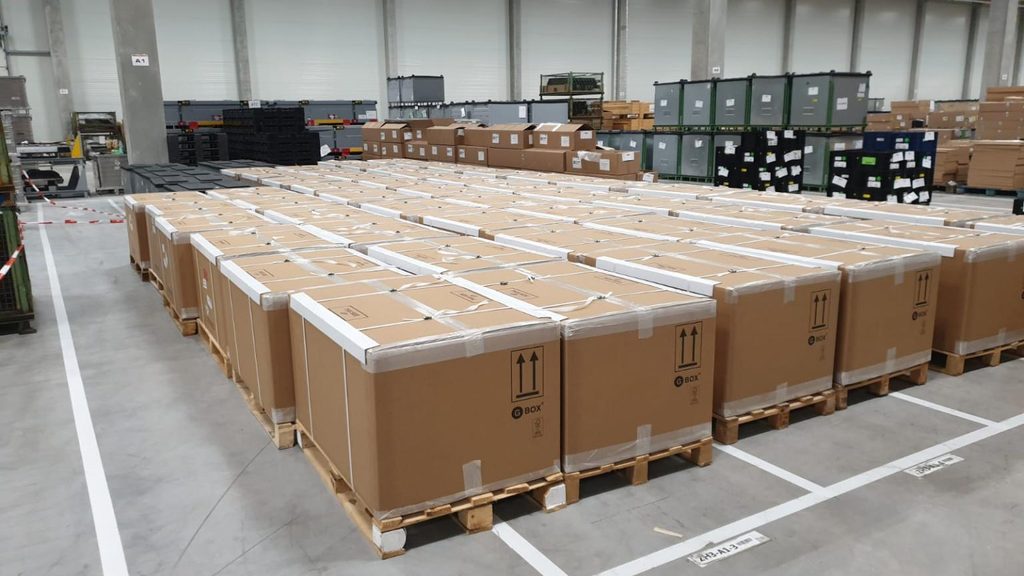
Determine how many retail boxes can fit inside one master carton while maintaining sufficient protection.
Carton Strength
Choose suitable corrugated carton specifications according to product weight, stacking requirements and transportation conditions.
Shipping Efficiency
Compare different carton arrangements to improve container utilization and reduce unnecessary packaging volume.
A slightly smaller retail box may create meaningful savings when multiplied across thousands of units.
For distributors and importers, packaging optimization can improve the overall landed cost of a product.
8. Approve Packaging Samples Before Mass Production
Never approve large-scale packaging production based only on digital artwork.
Request a physical packaging sample before confirming mass production.
Check the following:
- Box dimensions and internal fit.
- Color accuracy and printing quality.
- Surface finishing and material quality.
- Product positioning and accessory compartments.
- Opening and closing experience.
- Barcode and regulatory information.
- Carton strength and transportation protection.
It is also important to test the complete packed product rather than testing the empty packaging alone.
This helps identify potential problems before thousands of units enter production.
9. Work with a Manufacturer That Supports Custom Packaging
A reliable hair styling tool manufacturer should understand the relationship between product engineering, packaging structure and mass production.
Working with one manufacturing partner for product development and packaging coordination can simplify communication and reduce the risk of mismatched specifications.
At Aikepro, we support B2B customers developing customized hair styling appliances, including:
- Hair dryers.
- Hair straighteners.
- Curling irons.
- Air multi-stylers.
- Heated brushes.
- Hair clippers and trimmers.
Our OEM and ODM support includes product customization, color selection, logo printing, packaging development and production coordination.
For selected projects, we can also discuss customized product structures and accessory configurations to support your brand positioning.
Final Thoughts
The right hair styling tool packaging should do more than look attractive.
It should protect the appliance, support your sales channel, communicate important product information and help control transportation costs.
For beauty brands and distributors, packaging should be considered an essential part of product development rather than an afterthought.
Planning packaging early and approving physical samples before mass production can help reduce unnecessary costs and create a better experience for your customers.
Looking for customized hair styling tools with private label packaging?
Aikepro welcomes beauty brands, wholesalers, importers and distributors interested in OEM and ODM manufacturing.
Contact our team to discuss your product specifications, customized packaging and wholesale requirements.
Website: https://www.aikepro.ltd/
Email: info@aikepro.ltd